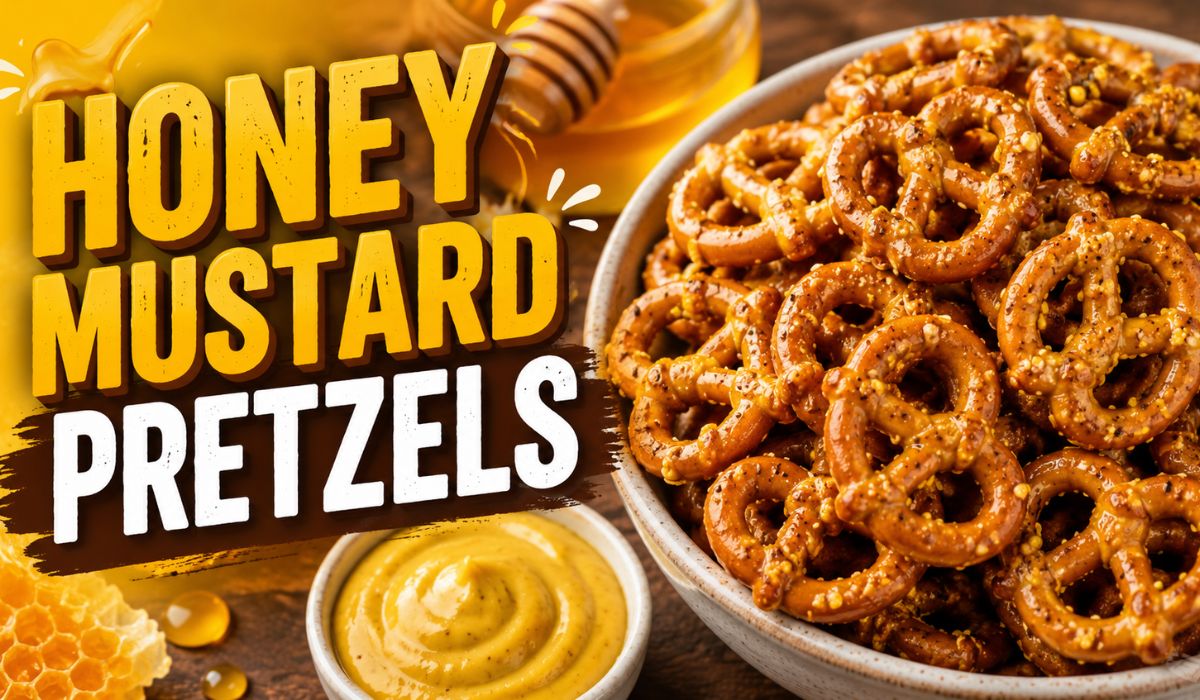

Honey mustard pretzels are a seasoned snack made by coating baked pretzels with a mix of sweet, tangy, and salty flavoring. The base is a traditional pretzel made from wheat flour dough, but the real identity of this snack comes from its coating.
You’ll commonly find them in supermarkets, convenience stores, and snack aisles in forms like twists, sticks, or bite-sized pieces. They are often sold as standalone packs or included in mixed snack assortments.
What makes them popular is the flavor combination. The sweetness of honey-style seasoning blends with mustard’s sharp tang, while the pretzel adds salt and crunch. This creates a snack that feels bold but balanced in every bite.
What Are Honey Mustard Pretzels Made Of?
The base of honey mustard pretzels is similar to regular baked pretzels. The dough is made using wheat flour, yeast, water, salt, and a small amount of oil. This dough is shaped and baked until it becomes firm and crunchy.
After baking, the seasoning is applied. This step defines the final flavor. Most commercial versions use a mix of sugar or honey flavoring, mustard powder, salt, and spice blends such as garlic or onion powder. Some products also include vinegar powder or citric acid to add mild acidity and balance sweetness.
Oil is lightly sprayed or mixed with pretzels before seasoning so the coating sticks properly. Without this step, the seasoning would not distribute evenly.
Manufacturers rely on this layered process to maintain consistent taste and texture across large batches.
Types Available in the Market
Honey mustard pretzels are generally available in three main forms, and each one gives a slightly different snacking experience depending on texture, seasoning intensity, and usage.
1. Pretzel Twists
Pretzel twists are the most common and widely sold form of honey mustard pretzels. Their classic spiral shape is designed in a way that helps hold seasoning evenly across the surface. This makes each bite balanced, where you get a mix of sweetness, mustard tang, and saltiness without one flavor dominating.
They are usually sold as standalone packs in supermarkets and are also used in mixed snack assortments. Because of their structure, they offer a steady crunch and are preferred for regular snacking.
2. Pretzel Sticks
Pretzel sticks are thinner, straight-shaped versions that provide a sharper and crispier bite. Due to their smaller surface area, the seasoning layer may feel slightly lighter compared to twists, but the crunch is more noticeable.
These are commonly used in snack mixes, party packs, and travel-friendly snack bags. Their shape makes them easy to eat in handfuls, especially when combined with nuts or other flavored snacks.
3. Pretzel Pieces (Chunks)
Pretzel pieces or chunks are broken parts of baked pretzels that carry a stronger seasoning coating. Since they are irregular in shape, more surface area is exposed to the honey mustard seasoning, which often results in a more intense flavor in each bite.
These are preferred by people who enjoy bold seasoning rather than a mild taste. They are also commonly found in snack mixes where stronger flavors are mixed with lighter ingredients for contrast.
Flavor Profile
The taste of honey mustard pretzels comes from a careful balance of three elements. The sweetness is usually mild and comes from honey flavoring or sugar-based seasoning. It is not overly sugary but designed to soften the sharpness of mustard. Mustard adds a tangy and slightly acidic note. This gives the snack its distinctive edge and prevents it from tasting flat or overly sweet. The pretzel base adds saltiness and crunch. This structural element is important because it carries the seasoning while providing texture contrast. When combined, these flavors create a layered experience. Each bite delivers a mix of sweet, salty, and tangy notes, which is why many people find them addictive as a casual snack.
How It Is Manufactured
The production of these pretzels follows a structured snack manufacturing process designed to ensure consistent taste, texture, and shelf stability.
Step 1: Dough Preparation
The process begins by preparing a basic dough using wheat flour, water, yeast, and salt. This mixture is kneaded until it reaches the right consistency for shaping.
Step 2: Shaping the Pretzels
The dough is then shaped into different forms such as twists, sticks, or bite-sized pieces depending on the final product type. This shaping step gives pretzels their familiar structure.
Step 3: Baking
The shaped dough is baked at controlled temperatures until it becomes firm and crisp. This step removes moisture and creates the crunchy base needed for seasoning.
Step 4: Cooling
After baking, the pretzels are cooled completely. Cooling is important because it helps the surface become stable so the seasoning can stick properly in the next stage.
Step 5: Preparing the Seasoning Mix
A separate seasoning blend is prepared using oil, sweeteners (such as sugar or honey flavoring), mustard powder, salt, and spice ingredients. This mix defines the final honey mustard taste.
Step 6: Coating Process
The cooled pretzels are placed into large rotating drums. The seasoning mixture is added while the drum rotates, allowing each piece to be evenly coated with flavor.
Step 7: Drying and Setting
After coating, the pretzels are dried or lightly heated again so the seasoning settles firmly on the surface. This step ensures the flavor does not easily wear off.
Step 8: Packaging
Finally, the finished pretzels are packed into sealed bags or containers. Packaging protects them from moisture and helps maintain crunchiness and freshness during storage and transport.
Nutritional Information
Nutritional values vary depending on the brand, but a typical serving (around 28 grams) usually contains:
- 120 to 150 calories
- 22 to 26 grams of carbohydrates
- 3 to 6 grams of fat
- 2 to 3 grams of protein
- 180 to 300 mg sodium
- Small amounts of sugar depending on seasoning
Most of the calories come from refined wheat flour and added oils used in coating. Sodium levels are often moderate to high, which is common in flavored snack foods.
Are They a Healthy Snack?
This snack is better considered an occasional treat rather than a health food. It gives quick energy from carbohydrates and satisfies cravings, but it is usually high in sodium and made with refined flour. Most packaged versions also contain added oils and seasoning mixes that improve taste but reduce overall nutritional value. Because of this, it does not provide much fiber, vitamins, or long-lasting fullness compared to healthier snack options.
It can still be enjoyed in moderation, especially as a quick snack during travel or leisure time. However, frequent or large portions are not recommended. For a healthier option, portion control is important, or you can try homemade versions with less salt and simpler ingredients.
Storage Guidelines
- Store honey mustard pretzels in an airtight container or resealable pouch after opening to maintain freshness.
- Keep the original pack tightly sealed to prevent exposure to air and moisture.
- Place them in a cool, dry place such as a pantry or kitchen cabinet.
- Avoid direct sunlight and heat sources, as they can affect texture and flavor.
- Do not refrigerate them, as refrigerator moisture can make them lose their crunch.
- If storing in bulk, divide into smaller portions to reduce repeated air exposure.
- Always close the container properly after each use to preserve crispiness.
- When stored correctly, they can remain fresh for several weeks, depending on the expiry date.
Conclusion
Honey mustard pretzels are a flavorful twist on a classic snack, combining the crunch of baked pretzels with a bold mix of sweet, tangy, and salty seasoning. Their appeal lies in the balance of taste—neither too sweet nor too sharp—making them enjoyable for casual snacking, parties, or on-the-go munching.
From simple ingredients like wheat flour and yeast to the carefully crafted honey mustard coating, every step in their preparation contributes to their distinct flavor profile. While they are widely loved for their taste and convenience, they are still a processed snack, so moderation is key when including them in your diet.
Frequently Asked Questions (FAQs)
1. What makes this snack different from regular pretzels?
It is coated with a sweet, tangy, and salty seasoning that gives it a stronger and more flavorful taste compared to plain pretzels.
2. What flavors can you expect in it?
It has a mix of mild sweetness, mustard-like tanginess, and salty crunch, creating a balanced and bold flavor profile.
3. Are they suitable for daily eating?
They are better enjoyed occasionally, as they are typically high in sodium and made from refined flour.
4. Can they be stored after opening?
Yes, they should be kept in an airtight container in a cool, dry place to maintain freshness and crunch.
5. Are there healthier alternatives available?
Yes, homemade versions with reduced salt and whole wheat flour can be a healthier alternative.