

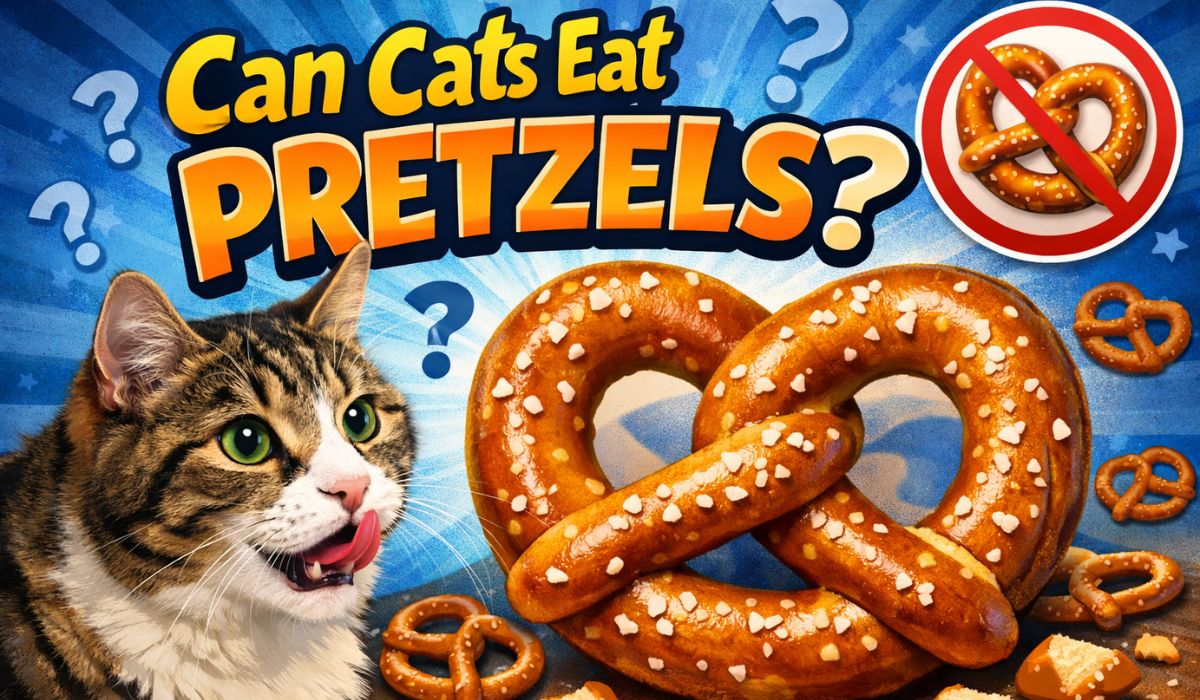
Cats often show interest in whatever their owners are eating. If you’ve ever been enjoying a salty snack and noticed your cat staring at you, you might have wondered whether it is safe to share.
Pretzels are one of those foods that look harmless at first glance, and if you’re wondering can cats eat pretzels as well? No, they can’t. It’s not suitable for pets. Cats have very specific dietary needs that are quite different from those of humans. While a small accidental bite is not usually dangerous, pretzels are still not a recommended part of a cat’s diet. Understanding what’s safe and what’s not helps you keep your pet healthy in the long run.
What Pretzels Are Made Of?
Pretzels are typically made using simple ingredients such as refined flour, yeast, water, and salt. Some flavored versions may also include cheese powder, butter, sugar, or seasoning blends.
These ingredients are fine for humans but do not provide any real nutritional value for cats. Cats rely mainly on animal-based protein to stay healthy, and their bodies are not designed to process large amounts of carbohydrates found in snacks like pretzels. Because of this, pretzels do not fit into a balanced feline diet.
Can cats eat pretzels
No, cats should not eat pretzels. Pretzels are not considered toxic to cats, but that does not make them safe or appropriate. Even a very small piece can add unnecessary salt, carbohydrates, and processed ingredients into your cat’s diet, which their body is not designed to handle.
Even though there may be no immediate reaction in some cases, pretzels still offer no nutritional benefit. They are processed human snacks that do not support a cat’s health in any way and should be avoided completely.
Cats that become used to human snacks may start showing less interest in proper cat food, which can affect their overall nutrition and long-term health.
The Problem with Salted Pretzels
Salt is one of the biggest concerns when it comes to pretzels and cats. Unlike humans, cats have a very low tolerance for sodium. Their bodies are small, and even a small increase in salt intake can disturb their internal balance.
When a cat eats salted pretzels, the first effect is usually increased thirst. You may also notice more frequent urination as the body tries to remove excess sodium. In mild cases, this may pass without serious issues, but it still puts unnecessary pressure on the kidneys.
If the intake is higher, symptoms can become more noticeable. These may include dehydration, vomiting, loss of appetite, or general weakness. Cats may also appear less active or restless.
Although severe salt poisoning is not very common, it is still a possible risk, especially if a cat eats a large amount at once. This is why even lightly salted snacks should always be avoided. A cat’s normal diet already contains the right amount of sodium needed for their body.
Health Concerns You Should Know
Feeding pretzels to cats can create more problems than most pet owners realize. One of the main issues is the high carbohydrate content. Cats do not have a biological need for carbohydrates in large amounts. Their energy comes mainly from protein and fat.
When cats consume too many carbs over time, it can contribute to weight gain and reduced activity levels. Some cats may also become less interested in their regular food, which can affect their overall nutrition.
Digestive issues are another common concern. Many cats have sensitive stomachs and cannot properly break down processed human snacks. This may lead to vomiting, gas, or diarrhea shortly after eating pretzels.
Flavored pretzels can be even more risky. Ingredients like onion powder, garlic seasoning, artificial flavoring, or preservatives are sometimes used, and these substances can be harmful or irritating to cats. Over time, repeated exposure to such snacks may disturb a cat’s digestive health and eating habits.
What If Your Cat Eats Pretzels?
If your cat accidentally eats a very small piece of pretzel, there is usually no need to panic. In most cases, nothing serious will happen, especially if it was plain and in a tiny amount.
However, it is still important to keep an eye on your cat for the next few hours. Watch for small changes such as unusual thirst, reduced appetite, mild restlessness, or changes in litter box habits.
If your cat eats a larger amount, the reaction can be stronger. You may notice vomiting, tiredness, or excessive drinking. In some cases, cats may also appear uncomfortable or less active than usual.
When these symptoms occur, it is always safer to contact a veterinarian. Even if the situation seems mild, professional advice can help prevent complications and ensure your cat stays safe.
What If Your Cat Eats Pretzels?
If your cat accidentally eats a very small piece of pretzel, there is usually no need to panic. In most cases, nothing serious will happen, especially if it was plain and in a tiny amount.
However, it is still important to keep an eye on your cat for the next few hours. Watch for small changes such as unusual thirst, reduced appetite, mild restlessness, or changes in litter box habits.
If your cat eats a larger amount, the reaction can be stronger. You may notice vomiting, tiredness, or excessive drinking. In some cases, cats may also appear uncomfortable or less active than usual.
When these symptoms occur, it is always safer to contact a veterinarian. Even if the situation seems mild, professional advice can help prevent complications and ensure your cat stays safe.
Safe Snacks for Cats
Instead of giving human snacks, it is always better to choose foods that match a cat’s natural diet. Cats are obligate carnivores, so their body works best with animal-based protein. Here are some safe options explained in detail:
-
Cooked plain chicken (no salt or spices)
Plain boiled or steamed chicken is one of the safest treats for cats. It is rich in lean protein, which supports muscle health and energy. Make sure it is cooked thoroughly and served without salt, oil, garlic, or onion. Small shredded pieces are easiest for cats to eat and digest.
-
Boiled turkey pieces
Turkey is another high-protein option that is gentle on the stomach. It contains essential amino acids that support overall body function. Always serve it plain and boneless. Avoid processed turkey meat like deli slices, as they often contain preservatives and high sodium.
-
Plain cooked fish like salmon or tuna (boneless)
Fish such as salmon or tuna can be offered occasionally as a treat. It provides omega-3 fatty acids, which help support skin and coat health. The fish should always be cooked or served plain, with no seasoning or oil. Also, ensure there are no bones, as they can be harmful.
-
Small amounts of scrambled egg (no oil or seasoning)
Eggs are a good source of protein and nutrients when prepared simply. Scramble them without butter, salt, or spices. They should be fully cooked before serving. Offer only a small portion, as eggs should be an occasional treat, not a daily food.
-
Vet-approved commercial cat treats
These treats are specially made for feline nutrition. They are balanced in nutrients and designed to be safe for regular feeding in small amounts. Many also include added vitamins and minerals that support overall health. Always check labels and choose trusted pet brands.
-
Wet cat food as an occasional treat
Wet cat food is not just a meal option but also a good treat. It contains higher moisture content, which helps keep cats hydrated. It is easier to chew and digest, especially for older cats or kittens. You can serve a small portion between meals as a reward.
-
Freeze-dried meat treats
Freeze-dried treats are made by removing moisture from raw meat while preserving nutrients. They usually contain a single ingredient like chicken or fish. These treats are highly protein-rich and free from fillers or additives, making them a clean snack option.
Conclusion
So, when it comes to the question, can cats eat pretzels, then the clear answer is no. Even though a small accidental bite is not usually dangerous, pretzels are still not suitable for a cat’s diet. They contain high salt, refined carbohydrates, and processed ingredients that do not support feline health. Over time, such snacks can lead to digestive discomfort, poor eating habits, and unnecessary strain on the body. Cats need a diet based on animal protein, not human snacks. Safer options like cooked chicken, turkey, or vet-approved treats are always better choices for keeping your cat healthy, active, and well-nourished.
Frequently Asked Questions (FAQs)
1. Can cats eat pretzels safely?
No, cats should not eat pretzels. While they are not toxic, they contain too much salt and carbohydrates, which are not suitable for a cat’s digestive system.
2. What happens if a cat eats a small piece of pretzel?
A small accidental bite usually does not cause serious harm. However, you should still monitor your cat for symptoms like thirst, vomiting, or mild discomfort.
3. Are pretzels bad for cats in the long term?
Yes. Regular feeding of pretzels can lead to poor nutrition, weight gain, digestive issues, and unhealthy eating habits over time.
4. Can salted pretzels harm cats more than plain ones?
Yes. Salted pretzels are more harmful because cats are very sensitive to sodium. Too much salt can cause dehydration and other health problems.
5. What is the best alternative to pretzels for cats?
Healthy alternatives include plain cooked chicken, turkey, fish, scrambled eggs (without seasoning), and vet-approved cat treats.