


Pretzels are one of those snacks you often grab without thinking too much. You see them in stores, airports, bakeries, and even at parties. Their twisted shape and salty taste make them easy to recognize and even easier to eat.
But before you make them a regular part of your snack list, it’s important to understand pretzel nutrition facts. Many people assume pretzels are a light and harmless snack. The truth is more balanced than that. Depending on the type, they can be low in fat but high in refined carbs and sodium.
Soft pretzels and crunchy packaged ones are not the same when it comes to nutrition. This is where most confusion starts for consumers.
What Are Pretzels?
Pretzels are baked snacks made mainly from wheat flour dough. They are shaped into knots or twists and often sprinkled with salt. The basic version is simple, but over time, many variations have appeared. They can be soft and warm, usually sold in bakeries, or hard and crunchy, commonly found in packaged snack sections. Both types taste similar but differ in texture and nutritional value.
Pretzels have been around for centuries and are believed to have originated in Europe. They were traditionally made by monks as simple baked bread snacks. Over time, they became popular in different countries and are now widely available in many forms. Today, they are mass-produced as packaged snacks as well as freshly baked bakery items.
Types of Pretzels Available Today
You will usually find three main types:
- Soft pretzels: Fresh, chewy, and often larger in size
- Hard pretzels: Crunchy, dry, and commonly sold in bags
- Flavored pretzels: Coated with cheese, chocolate, or spices
Each type has a different taste and slightly different pretzel nutrition facts, especially in calories and sodium content.
Pretzel Nutrition Facts (Complete Breakdown)
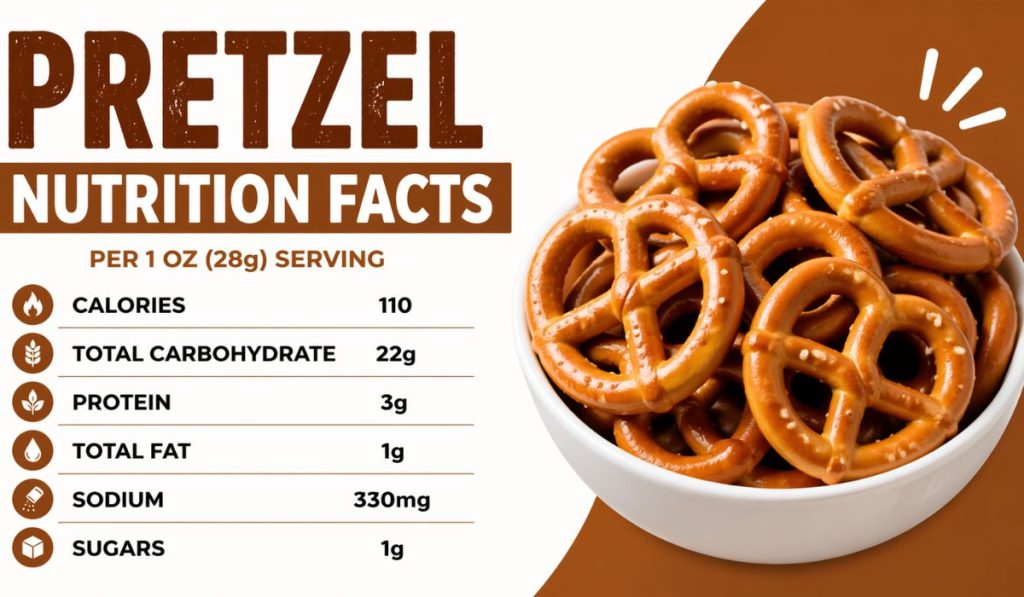
Understanding pretzel nutrition facts helps you decide how often you should eat them. While they seem light, their nutritional profile shows a mix of pros and cons.
-
Calories in Pretzels
Calories depend heavily on type and size. Hard pretzels stay in the range of 100–120 calories per 28 grams, making them appear light. Soft pretzels are much heavier in comparison. One medium soft pretzel weighing around 85–100 grams can contain 280–400 calories, especially if it is brushed with butter or served with dips.
-
Carbohydrates Content
Pretzels are mostly carbohydrates. A small serving gives around 23–25 grams of carbs, while a soft pretzel can go up to 55–80 grams. These carbs provide quick energy but do not keep you full for long, which is why hunger returns quickly after eating them.
-
Protein and Fat Content
Protein levels in pretzels are quite low. A serving of hard pretzels offers only 2–3 grams of protein, while soft pretzels provide slightly more at around 7–10 grams due to their larger size. Fat content is also minimal. Hard pretzels usually contain about 0.5–1 gram of fat, while soft versions may have 2–5 grams, depending on preparation.
-
Sodium Levels
Pretzels contain very high sodium levels. Even a small 28-gram serving can contain 350–450 mg of sodium, while a large soft pretzel can reach up to 500–900 mg. This makes pretzels a high-sodium snack, especially if eaten frequently.
-
Fiber Content
Fiber is quite low in pretzels. Most servings contain only 0.5–1 gram of fiber, while soft pretzels may reach 2–3 grams. Since refined flour is used, most of the natural fiber is removed during processing.
How Much You’re Really Eating (Portion Guide)
Portion size plays a big role in pretzel nutrition facts, especially because calories can add up faster than expected. What looks like a small snack can turn into a higher intake depending on how many servings you eat. Here’s a breakdown of common portions and their calorie values:
| Portion Size | Weight | Calories |
| 1 serving hard pretzels | 28 g | 100–120 kcal |
| 2 servings hard pretzels | 56 g | 200–240 kcal |
| 1 soft pretzel (medium size) | 85–100 g | 280–400 kcal |
If you add dips, cheese, or butter, the calorie count can increase quickly, sometimes adding another 100–200 calories without much notice.
Are Pretzels Good for Weight Loss and How to Choose Better Options
When you look at pretzel nutrition facts, pretzels may seem like a suitable snack for weight loss because they are low in fat. A standard 28 g serving contains only 100–120 calories and around 0.5–1 gram of fat, which makes them appear light.
However, the real issue is not fat—it is how quickly they affect hunger. Pretzels contain very little fiber (0.5–1 gram per serving) and only about 2–3 grams of protein, so they do not keep you full for long. This often leads to repeated snacking, which can increase total calorie intake without you realizing it.
Portion control plays the biggest role here. One serving may seem harmless, but two or three servings can quickly reach 200–360+ calories. That is why pretzels can fit into a weight loss plan only when eaten in controlled amounts.
To make better choices, small adjustments can help. Whole grain pretzels are a better option because they offer slightly more fiber, which supports fullness. It is also smart to check sodium levels, since a 28 g serving already contains around 350–450 mg of sodium. Choosing lower-sodium versions can reduce daily intake without changing taste much.
Another simple step is to avoid heavy toppings like cheese dips or butter coatings, as these can add 100–200 extra calories very quickly.
How to Make Better Pretzel Choices
Not all pretzels’ nutritional values are the same. A few small choices can make a difference:
- Choose whole grain versions when available
- Look for lower-sodium options (important since 350–450 mg per serving is common)
- Avoid heavy toppings like cheese, butter, or sugary coatings
- Stick to one measured serving instead of eating directly from the pack
Wrapping Up
Pretzels are a simple and widely available snack, but pretzel nutrition facts show that they are not as light as they appear. They are low in fat and easy to eat, but also low in fiber and protein, with noticeable sodium levels.
The key is not to avoid them completely, but to understand portions. A small serving can fit into a balanced diet, while repeated or large servings can quickly increase calorie and sodium intake.
If you choose wisely and keep portions in control, pretzels can still be an occasional snack without affecting your overall eating habits.
Frequently Asked Questions (FAQs)
-
Are pretzels healthy or unhealthy?
Pretzels are not unhealthy in small amounts, but they are not very nutrient-dense. They are low in fat but also low in fiber and protein, so they should be eaten in moderation.
-
How many calories are in pretzels?
A 28 g serving of hard pretzels contains about 100–120 calories, while a medium soft pretzel can contain 280–400 calories depending on size and toppings.
-
Do pretzels contain a lot of sodium?
Yes. A small serving can contain 350–450 mg of sodium, and larger soft pretzels can go up to 500–900 mg, which is considered high for a snack.
-
Are pretzels good for weight loss?
They can be included in a weight loss plan if portion sizes are controlled. However, because they are low in fiber and protein, they do not keep you full for long.
-
What is the healthiest type of pretzel?
Whole grain, low-sodium pretzels without heavy toppings are generally a better choice compared to heavily flavored or butter-coated versions.